To Be Seen, To Be Heard

Last updated on
Friday, September 4th, 2026
Experience type: 
In-Person
Program Description

How have Indigenous people used public events to claim agency over their representation during times of colonial oppression? How do our experiences, knowledge, and identities shape the way we interpret archival photographs?

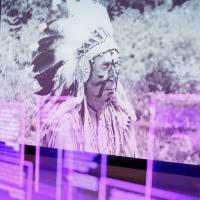
This program is inspired by one of MOA’s past feature exhibitions, To Be Seen, To Be Heard: First Nations in Public Spaces, 1900–1965. This exhibition It explored how First Nations people represented themselves as Indigenous, self-determined and modern in urban public spaces during the period of the potlatch prohibition and other forms of erasure in Canada. Prior to this program, teachers will share excerpts from this exhibition’s documentary with students in the classroom. During the program at MOA, students will visit a selection of works by contemporary Indigenous artists and makers to expand on the ideas of To Be Seen, To Be Heard. Finally, students will participate in a reflective art making activity using mixed media self-portraiture to explore themes of representation, agency, and futurity.

Please note: Teachers must facilitate a pre-visit activity in class to introduce key concepts for the To Be Seen, To Be Heard program. Please refer to the accompanying Teacher’s Notes for instructions and complete the lesson prior to your visit.
Book Now

Big Ideas
  • Artists experiment in a variety of ways to discover new possibilities.
  • Creative expression is a means to explore and share one’s identity within a community.
  • Dance, drama, music, and visual arts are each unique languages for creating and communicating.
  • Interactions between First Peoples and Europeans lead to conflict and cooperation, which continues to shape Canada’s identity.
  • Changing ideas about the world created tension between people wanting to adopt new ideas and those wanting to preserve established traditions.
  • Contacts and conflicts between peoples stimulated significant cultural, social, political change.
  • Exploration, expansion, and colonization had varying consequences for different groups.
  • Trip Details
    City: 
    For Grades: 
    9, 10, 11, 12
    Days Offered: 
    Times Offered: 
    Duration: 
    90 minutes unless otherwise stated.
    Maximum Students: 
    Offered In French: 
    No
    Also Offered For: 
    Other
    Packages Provided: 
    Pre-Visit Information Package
    Fee Details
    Cost Per Student: 
    $8.00
    Fee Notes: 
    • Museum Admission: Groups of 10 or more students (K–12) receive a discounted rate of $8/student (free for Indigenous students and students 5 years old and under).
    • Program Fee: In addition to museum admission, guided school programs have a flat fee of $105/class (max. 30 students).
    • Cancellation Policy: 50% of the total booking fee will be charged if a cancellation notice is received less than two weeks prior to your scheduled visit.